
Overview
Argentina is a South America nation in Americas, with Buenos Aires as its capital and home to around 44,494,502 people. The currency is the Argentine peso (ARS). The main languages are Guaraní, Spanish. From its landscapes and cities to its cuisine and traditions, Argentina offers travelers a distinctive slice of the world to explore.
Capital
Buenos Aires
Population
44.5M
Currency
$ · Argentine peso (ARS)
Languages
Guaraní, Spanish
Timezone
GMT-4
Calling code
+54
History
Argentina has a rich history shaped by its position in Americas and the cultures of South America, leaving a legacy visible in its landmarks, cities and traditions today.
Culture
Culture in Argentina is expressed through its food, festivals, music and daily rhythms — a warm invitation to experience local life first-hand.
Best time to visit
Good months to visitJJan
FFeb
MMar
AApr
MMay
JJun
JJul
AAug
SSep
OOct
NNov
DDec
The dry season (roughly May–September) is ideal for most regions
Plan with confidence
Know before you go
Getting in & visas
Passport holders of the following countries do not need a visa to enter Argentina when the purpose of the visit is tourism for up to 90 days (unless otherwise noted): Andorra, Armenia, Australia, Austria, Barbados, Belarus, Belgium, Bolivia, Brazil, Bulgaria, Canada, Chile, Colombia, Costa Rica, Croatia, Cyprus, Czech Republic, Denmark, Ecuador, El Salvador, Estonia, Fiji, Finland, France, Georgia, Germany, Greece, Grenada, Guatemala, Guyana, Haiti, Honduras, Hong Kong, Hungary, Iceland, Ireland, Israel, Italy, Jamaica (30 days), Japan, Kazakhstan (30 days), Republic of Korea, Latvia, Liechten…
Money & costs
The currency exchange situation is quite complicated, much more so than in say Southeast Asia or most other countries of the world. It may drive you crazy when you visit but spare a thought for the locals who don't get a choice. Since 1969 thirteen zeroes have been dropped (a factor of ten trillion), the peso has been revalued again and again, and its name changed.
Getting around
Argentina is a colossal country. With a land area of , travelling from one region to another can take a lot of time. It is a government requirement that travellers produce identification when buying plane or long distance bus tickets. You are always asked for identification when buying bus tickets and many bus drivers ask again to see your passport as you are boarding. Some of the provinces have restrictions on the transport of fresh fruit and vegetables. Police will occasionally search buses and check the luggage of plane passengers when they disembark.
By bus
Argentina boasts an outsta…
Language
The official language is Spanish. Generally, most people speak Spanish using a local dialect, Castellano Rioplatense, which is subtly different from both the language of Spain and that of Central America. Most notably, the pronoun "tú" is replaced by "vos", and the you plural pronoun "vosotros" replaced with "ustedes", the latter being common throughout Latin America.
Staying safe
Because it is well known that tourists bring hard currency to Argentina to avoid the official exchange rate, tourists can be targets of crime. Exercise extra caution here, don't go to Western Union alone, be careful changing on the street, and bring a lock for your bags, take the $1-2 Uber instead of walking at night. The 500 or so dollars you may bring represents 3 months at the minimum wage, so be careful.
Health
Visiting Argentina doesn't raise any major health worries. Certain vaccinations may be necessary for visitors, depending on what parts of Argentina you plan to visit. Yellow fever vaccinations are recommended for those visiting the Northern forests. If you missed your vaccination at home, it is possible to receive a free yellow fever shot in Argentina, in one of the bigger cities. This can be of advantage if you travel further to other Amazonian countries. However, be prepared to be queued at the very end—first the locals are treated. Also, there are specific days of the week when the va…
Staying connected
You can get a prepaid Movistar / Claro / Personal SIM card for a few pesos / free at phone shops, all you pay is about ARS20 (about US$5) for your initial credits. Inserting the SIM card into your unlocked mobile phone should work, although to register the SIM you might have to enter your passport (or any 9 digit) number. You then have your personal Argentinian phone number, which is very useful to keep in touch with other travellers, either by calling or by writing text messages. Calls cost aro…
Local etiquette
Generally speaking, Argentines are expressive and emotive conversationalists.
Communication style
Compared to other South American nations, Argentines are often seen as more direct and forthright in their communication style. Try not to be offended by the way they speak; in most cases, they rarely intend to make you feel bad or uncomfortable.
Practical guidance for Argentina is summarised from Wikivoyage (CC BY-SA). Always confirm official visa, health and safety requirements before you travel.
Getting around & staying connected
Cheapest ways to travel in Argentina
Ride apps & transport
- 1Uber
App-based cars with upfront fares — usually the cheapest metered ride in big cities.
- 2Cabify
Fixed-fare cars popular in Spain and across Latin America.
- 3DiDi
China's dominant ride app (also big across Latin America); often undercuts Uber.
Cabify and DiDi are popular; regular radio-taxis are also cheap.
Cheapest SIM for foreigners
Personal / Claro / Movistar
Cheap prepaid SIMs; the SUBE card covers Buenos Aires transit.
eSIM (Airalo / Holafly) lets you get online the moment you land — handy if you don't want to queue for a SIM.
Prices and app coverage change often — figures are indicative for 2026, so confirm the current tourist plan in the app or at the airport kiosk.
Plan your trip
A route through Argentina
A suggested loop connecting Argentina's major cities by proximity — a practical order for a multi-city trip.
Where to go
Top cities

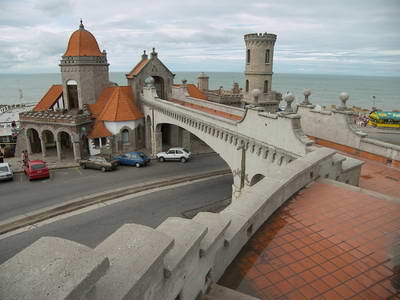


In pictures
Argentina gallery
Location
Find it on the map
Plan your trip
Estimate your budget
Trip budget estimator
Estimated total (your figures)
$3,160
≈ $1,580 per person · $451 per day
This tool only multiplies the numbers you enter — no prices are assumed.
Good to know
Frequently asked questions
Keep exploring


